
Investment logic and revenue role
OPEX glamping should be calculated by unit role. Alpina and Delta can create compact room inventory; Swift may support family or longer stays; QBBQ can add food, pool or event revenue. A project becomes investable when every module has a job in the income model.
Revenue is not only nightly rate
Guests may also pay for breakfast, sauna, BBQ service, late check-out, private terrace setups, events or longer seasonal stays.
Numbers that must be modelled
Model CAPEX, delivery, foundation, roadworks, utilities, furniture, smart systems, marketing, booking commissions, cleaning, repairs, insurance and taxes. Then test ADR and occupancy under conservative, realistic and optimistic assumptions. Do not let the best month define the whole business.
Unit economics before site economics
Track each model separately so that Alpina does not hide the performance of Swift or service revenue from QBBQ.
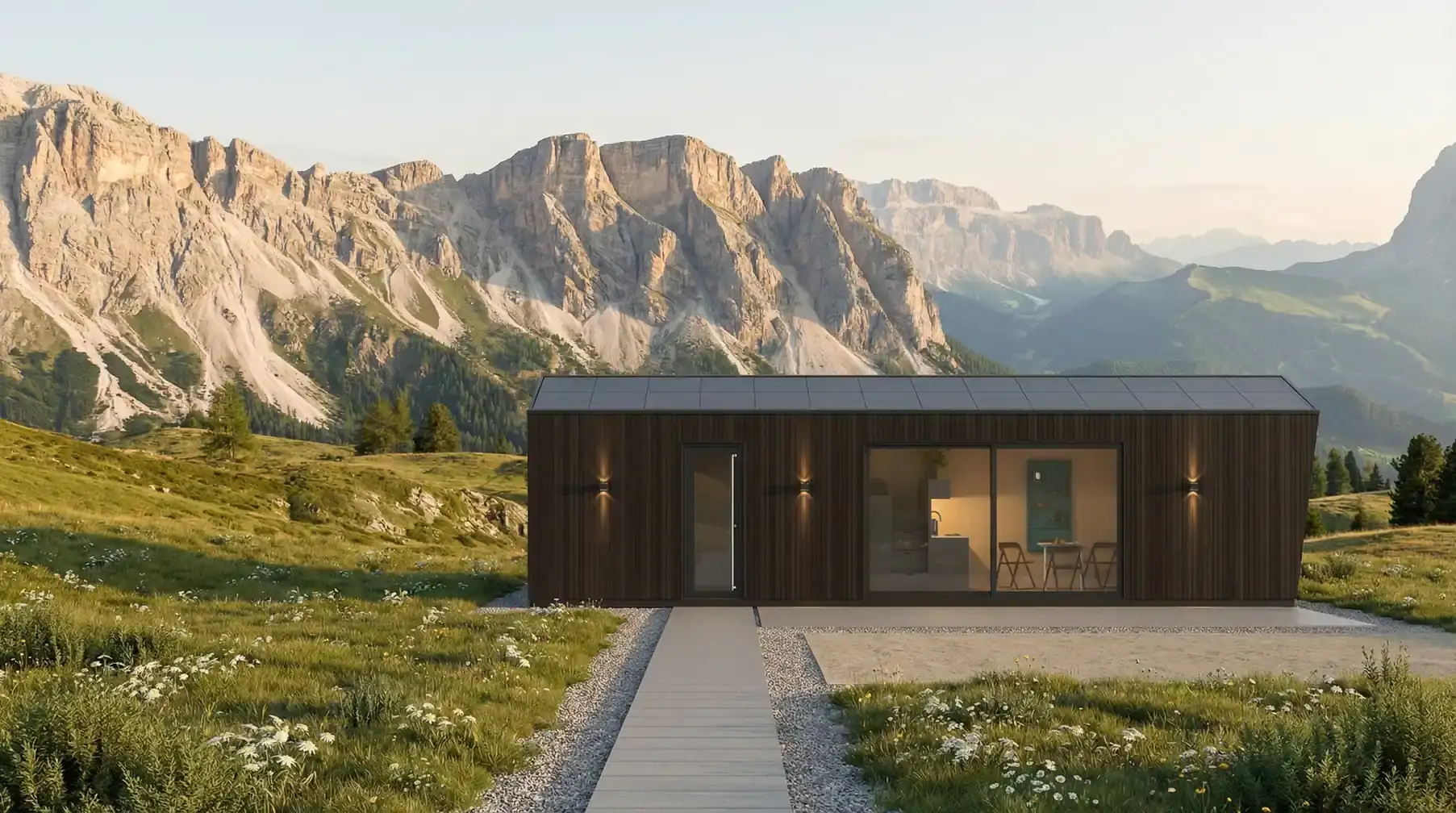
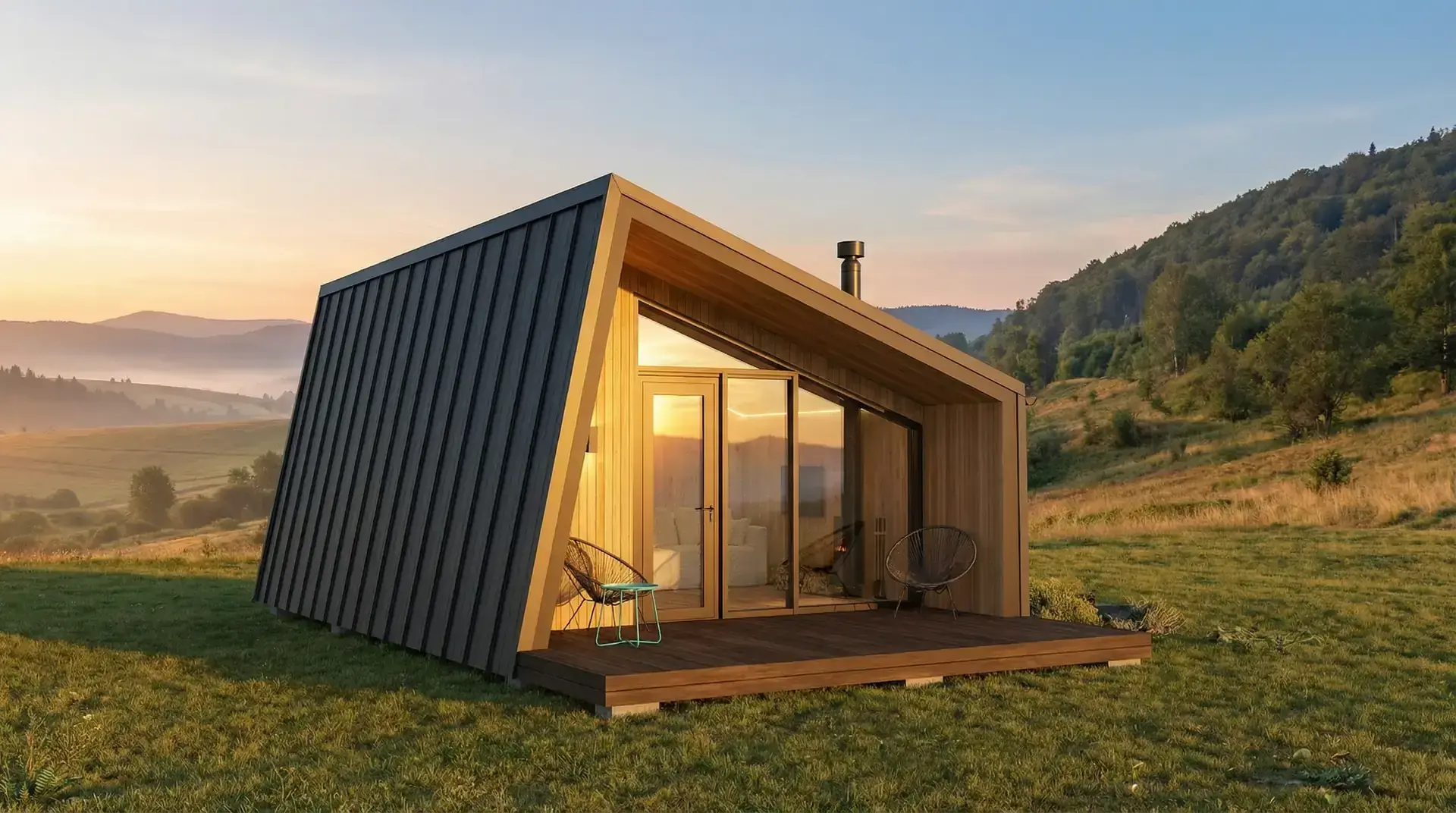
Practical business scenario
An investor may launch with five Alpina units, one family unit and one QBBQ. If occupancy proves stable, the next phase can add more compact rooms instead of overbuilding the first season.
Financial modelling workflow
The financial workflow should separate model economics from site economics. For each unit, calculate purchase, delivery, foundation, utility connection, furnishing, smart systems, cleaning time, expected ADR, expected occupancy and maintenance reserve. Then add site costs: road, lighting, parking, landscaping, booking engine, staff, insurance and contingency.
A compact unit such as Alpina may look attractive on CAPEX, while a larger unit such as Swift can support family stays and higher ADR. QBBQ should be modelled separately as a service or amenity revenue driver, not hidden inside general infrastructure.
Financial comparison
The table below gives a practical comparison lens for this topic. It is not a substitute for a site-specific quote, but it helps frame the first conversation.
| QHOME model | Area | Revenue role | Cost risk |
|---|---|---|---|
| Alpina | 29.11 m² | fast room count | occupancy seasonality |
| Delta | 26.2–38 m² + terrace | premium nightly rate | higher specification cost |
| Swift | 25.26–48 m² | family rental | cleaning time |
| Atak | 20–35 m² | service revenue | staffing and safety |
Common mistake
The common mistake is calculating payback only from optimistic high-season occupancy. A park based on Alpina, Delta or Swift should also model shoulder season, cleaning cost, utility spikes, replacement items, booking fees and downtime between guests.
QHOME-specific recommendation
For investment use, QHOME selection should begin with revenue role: compact rooms for volume, larger homes for family ADR, and service modules for extra spend.
- Alpina — 29.11 m², from €59,800; best fit: turnkey micro-chalet for glamping and hotel-room use with panoramic lounge and GearBox.
- Delta — 26.2–38 m² + terrace, from €21,600; best fit: compact scenic modular home for couples, guest accommodation and glamping projects.
- Swift — 25.26–48 m², from €15,150; best fit: flexible line for camping or private living near the city with light architecture and simple ergonomics.
- Atak — 20–35 m², from €11,660; best fit: compact minimalist home for two people with functional layout and landscape integration.
- QBBQ — 7.2 m², from €10,000; best fit: premium outdoor kitchen for terraces, villas, restaurants, campsites and hospitality projects.
Decision checklist
- build the model from ADR, occupancy and season length
- include cleaning, utilities, insurance, maintenance and marketing
- separate phase-one launch cost from future expansion cost
- track payback by unit type, not only by whole site
- plan exit value: movable asset, operating business or land improvement
Questions to ask before the quote
- What ADR and occupancy are realistic for this location and guest segment?
- Which model produces the best unit economics after cleaning and maintenance?
- Can the project launch in phases without damaging guest experience?
- Which costs are one-time infrastructure and which repeat per module?
- How will QBBQ, sauna, food service or events affect total guest spend?
Reference notes
- QHOME.EU catalog — Product categories, areas, price ranges and scenarios.
- Grand View Research — Europe Glamping Market Outlook — European glamping growth context.
- Mordor Intelligence — Europe Prefabricated Housing Market — European prefab housing market sizing and growth context.
Frontier technology upgrades for OPEX glamping in 2026
The newest and most interesting technologies for OPEX glamping should be presented in three levels: available now, premium or limited, and watchlist. This keeps the article exciting without promising systems that are not yet bankable, serviceable or legal in the target country.
For a glamping operator, the strongest frontier technologies are not the most exotic ones; they are the systems that reduce complaints, automate service alerts and keep guest units comfortable when the site is full.
What is worth mentioning now
| Technology | 2026 status | Why it is exciting | Main caution | QHOME fit |
|---|---|---|---|---|
| AI revenue management for glamping AI glamping revenue management | available / software-led | AI pricing can adjust rates by season, weather, events, booking pace and competitor availability, making modular accommodation more financially responsive. | bad data creates bad prices | Alpina, Delta, Magnum, QBBQ |
| Predictive maintenance dashboard predictive maintenance modular home | available / operations-led | Predictive maintenance connects water, HVAC, battery, access and IAQ data so operators fix issues before guests complain. | alerts without responsibility become noise | Delta, Alpina, QBBQ, Mantra |
| Rack battery bank for multi-unit modular resorts rack battery storage modular resort | available now / project-scale | A rack battery bank is more relevant than many small scattered batteries when a glamping site or modular village shares PV, water systems, pumps and lighting. | not a DIY storage room | Delta, Alpina, Magnum, QBBQ |
| Tank telemetry and AI leak detection water telemetry modular home | available / practical | Remote water telemetry prevents the classic off-grid failure: a guest arrives and the tank, pump or filter has failed unnoticed. | alerts must trigger real service action | Alpina, Delta, QBBQ, Mantra |
| Package MBR wastewater treatment plant MBR wastewater treatment modular resort | available / project-scale | A package MBR can treat wastewater from several modules, turning sanitation into a professional site-infrastructure package rather than a cabin-by-cabin afterthought. | requires permits and service contract | Delta, Alpina, Magnum, QBBQ |
Do not oversell the future
The safest editorial rule: if a technology is a pilot, lab record or infrastructure concept, describe it as a watchlist option. Do not put it into a buyer checklist until the supplier, warranty, installation route and local approval are clear.
- AI revenue management for glamping: Letting pricing software discount premium inventory without strategy.
- Predictive maintenance dashboard: Adding dashboards without a maintenance workflow.
- Rack battery bank for multi-unit modular resorts: Putting a rack battery in a damp, unventilated storage space with no service clearance.
Decision checkpoints before adding frontier tech to a quote
- AI revenue management for glamping: Use AI as a decision tool, not as unmanaged autopilot.
- Predictive maintenance dashboard: Every alert needs an owner, threshold and action.
- Rack battery bank for multi-unit modular resorts: Use central storage when shared infrastructure and professional maintenance are realistic.
- Tank telemetry and AI leak detection: Define alarm thresholds, owner, response time and spare parts.
- Separate “available now” items from “future-ready” preparation in the article and in the commercial conversation.
- Confirm local installer availability, service response time and warranty transfer before recommending the system to a private buyer or hospitality operator.
QHOME-specific recommendation
Premium business scenario: combine Alpina or Delta guest units with smart access, water telemetry, predictive maintenance and AI pricing before adding experimental hardware. That sequence protects reviews and cash flow first.
Reference signals behind this 2026 technology layer
- QHOME.EU homepage and catalog overview
- IEA Global Energy Review 2026 — Battery storage
- European Commission — Circular systems can drive reductions in city freshwater use
- European Environment Agency — Water scarcity conditions in Europe
FAQ
How do I calculate OPEX glamping?
Use a full model: module cost, delivery, foundation, utilities, fit-out, cleaning, marketing, booking fees, maintenance, insurance, taxes, ADR, occupancy and season length.
Which QHOME models are investment-oriented?
Alpina, Delta, Swift and QBBQ can support different income roles: room nights, family stays, phased expansion and outdoor service revenue.
What payback period should I expect?
There is no universal payback. It depends on country, land, seasonality, nightly rate, occupancy, financing and operating discipline. Model at least conservative, realistic and optimistic cases.
Is a compact unit better for ROI?
Compact units can improve room count and lower unit CAPEX, but premium units may earn higher ADR. The right answer depends on the target guest and site positioning.
What cost is most often forgotten?
Operators often forget utilities, road works, crane, landscaping, linen flow, repairs, booking commissions, staff time and the cost of downtime.