
Buyer intent and project context
The right answer for small modular home depends on the job the house must do. A permanent residence needs quiet zoning, storage, year-round comfort and service access. A rental unit needs fast cleaning, durable finishes, simple guest instructions and a photogenic first impression. A glamping project needs repeatable rooms and clear operating flow. That is why Atak, Swift and Delta are not substitutes for each other; they solve different project risks.
What to define first
Before comparing prices, write a one-page brief: number of users, season, utilities, site access, legal path, desired opening date and whether the home must earn income. This brief prevents overbuying area or underbuying comfort.
How to compare QHOME models
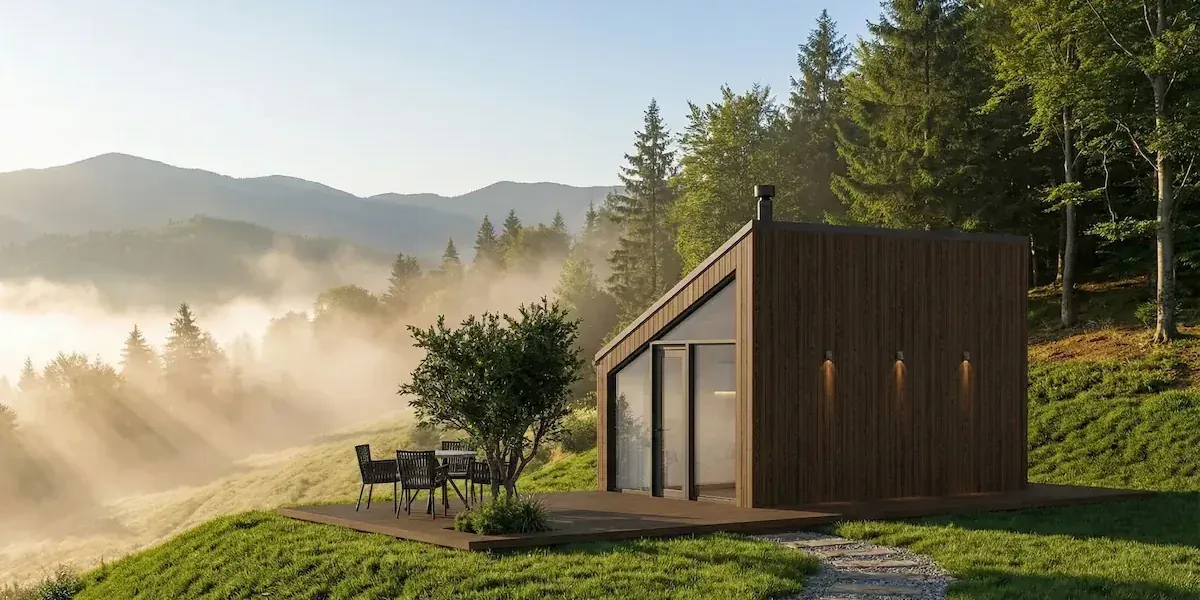
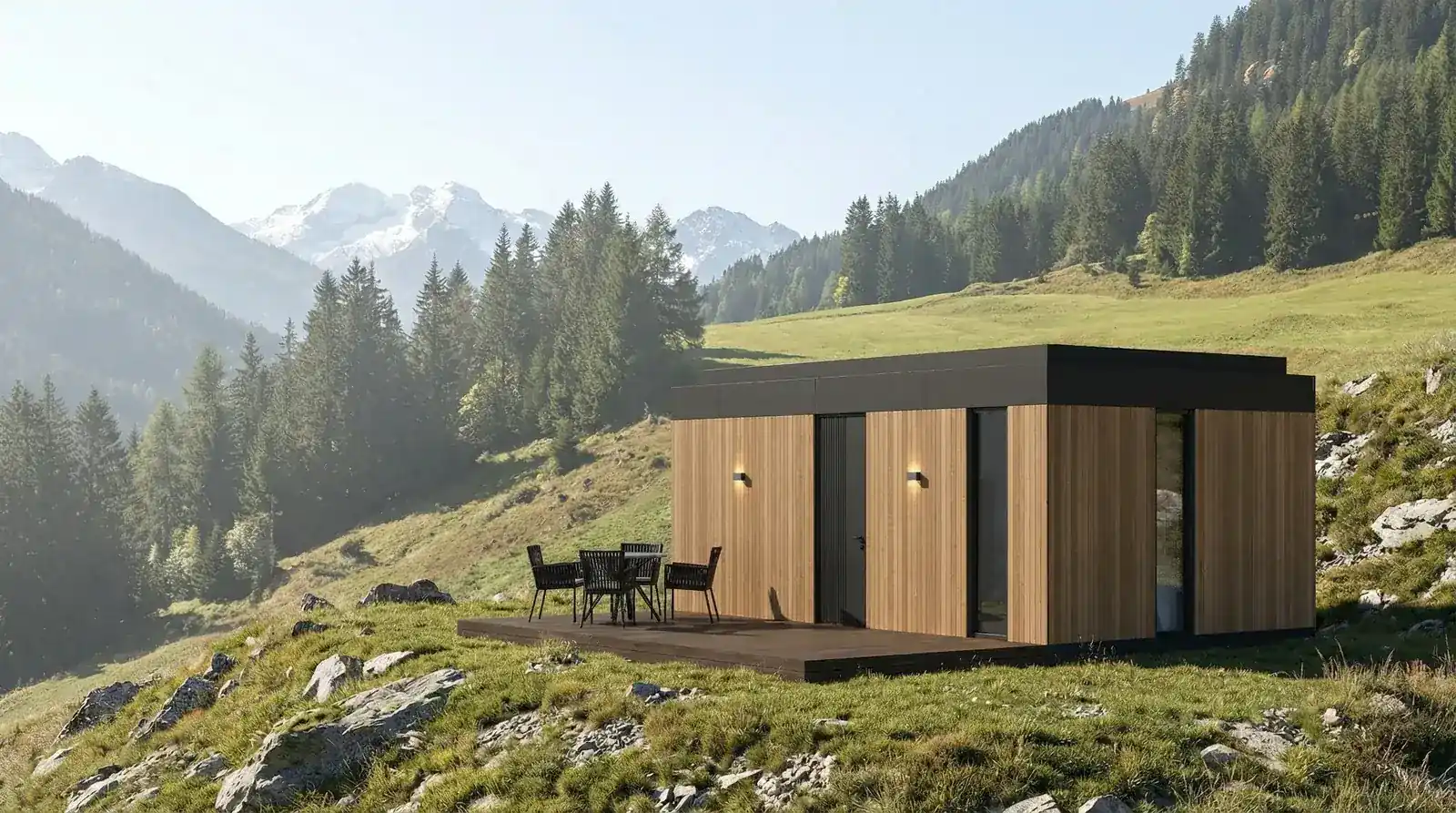
Compare QHOME models by scenario, not only by square metres. Atak may be strongest where family comfort or premium positioning is required, while Swift and Delta may create faster return in guest accommodation. Alpina or QBBQ can add an outdoor service layer when food, terrace or pool activity matters.
What the catalog comparison should include
Area, starting price, category, equipment and installation logic should sit beside operating questions: how will people arrive, sleep, cook, shower, heat, cool and leave the unit after a stay?
Practical scenario
Imagine a coastal owner who wants one private family house and two rental units. A large model such as Atak can become the main residence, while compact units such as Swift or Delta create revenue without turning the entire plot into a hotel. If guests need a memorable outdoor point, QBBQ can become a shared kitchen or private terrace upgrade.
Implementation workflow
Turn the buyer decision into a sequence. First, define whether the project is private living, guest accommodation or revenue. Second, confirm the plot: road, crane, foundation, utilities, views, drainage and legal path. Third, shortlist models such as Atak, Swift and Delta. Fourth, compare base package, premium options, smart systems and outdoor additions. Fifth, decide how the home will be maintained after installation.
This sequence protects the buyer from the classic trap of choosing a model too early and then discovering that the site, utility budget or business model points in another direction. For small modular home, the workflow is more important than a single render because it makes the buying conversation measurable.
Comparison table
The table below gives a practical comparison lens for this topic. It is not a substitute for a site-specific quote, but it helps frame the first conversation.
| QHOME model | Area | Starting price | Best use |
|---|---|---|---|
| Atak | 20–35 m² | from €11,660 | permanent living |
| Swift | 25.26–48 m² | from €15,150 | guest accommodation |
| Delta | 26.2–38 m² + terrace | from €21,600 | glamping / hospitality |
| Alpina | 29.11 m² | from €59,800 | outdoor revenue |
Common mistake
The most common mistake is comparing only the starting price and image. A buyer may see Atak or Swift as a finished object, but the real project also includes access, foundation, crane, utility points, climate strategy and future maintenance. Compare the operating scenario, not only the render.
QHOME-specific recommendation
For this topic, QHOME models should be compared by scenario rather than by size alone. The right unit is the one that reduces project risk and matches daily use.
- Atak — 20–35 m², from €11,660; best fit: compact minimalist home for two people with functional layout and landscape integration.
- Swift — 25.26–48 m², from €15,150; best fit: flexible line for camping or private living near the city with light architecture and simple ergonomics.
- Delta — 26.2–38 m² + terrace, from €21,600; best fit: compact scenic modular home for couples, guest accommodation and glamping projects.
- Alpina — 29.11 m², from €59,800; best fit: turnkey micro-chalet for glamping and hotel-room use with panoramic lounge and GearBox.
- QBBQ — 7.2 m², from €10,000; best fit: premium outdoor kitchen for terraces, villas, restaurants, campsites and hospitality projects.
Decision checklist
- define private, guest or revenue use before choosing area
- confirm access road and crane zone before production
- separate house price from foundation, delivery and utilities
- check heating, ventilation and service access for the season
- choose the smallest model that still supports the daily scenario
Questions to ask before the quote
- Which QHOME models should be compared for small modular home, and why?
- What is included in the starting price, and what is project-specific?
- What site information is required before a reliable offer?
- Which utilities, smart systems and outdoor additions should be planned now?
- What assumptions could change delivery, installation or operating cost?
Reference notes
- QHOME.EU catalog — Product categories, areas, price ranges and scenarios.
- Mordor Intelligence — Europe Prefabricated Housing Market — European prefab housing market sizing and growth context.
Frontier technology upgrades for small modular home in 2026
The newest and most interesting technologies for small modular home should be presented in three levels: available now, premium or limited, and watchlist. This keeps the article exciting without promising systems that are not yet bankable, serviceable or legal in the target country.
For a glamping operator, the strongest frontier technologies are not the most exotic ones; they are the systems that reduce complaints, automate service alerts and keep guest units comfortable when the site is full.
What is worth mentioning now
| Technology | 2026 status | Why it is exciting | Main caution | QHOME fit |
|---|---|---|---|---|
| Solar-ready roof, conduit and structural reserve solar ready modular home 2026 | available now / should be standard | Solar-ready design is becoming a core EU-facing topic because roofs, conduits, inverter space and structural loading are cheaper to prepare in the factory than retrofit later. | solar-ready is not the same as installed solar | Mantra, Lumen, Element, Alpina |
| R290 propane heat pump R290 heat pump modular home | available / fast-growing premium | R290 heat pumps use a low-GWP natural refrigerant and are becoming a strong premium option for electrified heating in European homes. | safety rules and installer competence matter | Mantra, Lumen, Zephyr, Element |
| Smart rainwater harvesting with sensor-controlled first flush smart rainwater harvesting modular home | available / practical | Rainwater harvesting becomes more professional when tanks, first-flush diversion, filtration and level sensors are integrated with the modular project. | potable use rules vary by country | Mantra, Sofia, Alpina, Delta |
| Matter + Thread smart home backbone Matter smart home modular home | available / practical premium | Matter and Thread make smart modular homes easier to integrate across ecosystems instead of locking every device into one vendor stack. | not every device category is equally mature | Mantra, Lumen, Alpina, Delta |
| Drone / LiDAR site scan for module placement LiDAR site scan modular home | available / practical premium | A quick site scan can prevent route, slope, crane, drainage and view-orientation mistakes before the module is ordered. | scan data needs interpretation by design/logistics team | Mantra, Zephyr, Delta, Magnum |
Do not oversell the future
The safest editorial rule: if a technology is a pilot, lab record or infrastructure concept, describe it as a watchlist option. Do not put it into a buyer checklist until the supplier, warranty, installation route and local approval are clear.
- Solar-ready roof, conduit and structural reserve: Calling a home solar-ready because it has a flat roof, without conduit, inverter space or structural allowance.
- R290 propane heat pump: Mentioning R290 as a buzzword without explaining safety, siting and installer requirements.
- Smart rainwater harvesting with sensor-controlled first flush: Installing a tank without first-flush, overflow and maintenance access.
Decision checkpoints before adding frontier tech to a quote
- Solar-ready roof, conduit and structural reserve: Make solar-ready an ordering checklist item even if PV is installed later.
- R290 propane heat pump: Use where electrified heating, low-GWP refrigerant and skilled installation align.
- Smart rainwater harvesting with sensor-controlled first flush: Design catchment, treatment, use case and legal status together.
- Matter + Thread smart home backbone: Choose Matter/Thread-compatible devices where possible and document the network.
- Separate “available now” items from “future-ready” preparation in the article and in the commercial conversation.
- Confirm local installer availability, service response time and warranty transfer before recommending the system to a private buyer or hospitality operator.
QHOME-specific recommendation
QHOME scenario: start with the model and use case, then select the frontier package. Mantra, Lumen, Element, Alpina, Delta, Zephyr can support different levels of technology, but the quote should separate available-now systems from premium-limited and watchlist options.
Reference signals behind this 2026 technology layer
- European Commission — Solar energy in buildings
- European Commission — Energy Performance of Buildings Directive
- IEA Global Energy Review 2026 — Heat pumps
- European Heat Pump Association — 2025 sales preliminary data
- European Environment Agency — Water scarcity conditions in Europe
- European Commission — Circular systems can drive reductions in city freshwater use
- Connectivity Standards Alliance — Matter
FAQ
What is the first step for small modular home?
Define the use case, site conditions, budget, utilities and operation model before choosing the module.
Which QHOME models should I compare?
Start with Atak, Swift and Delta, then compare area, price, installation path and operating scenario.
Can one modular home work for both private and business use?
Yes, but the specification should include both daily comfort and guest-operation details such as access, cleaning, durability and climate control.
What should I verify before ordering?
Verify land use, access, foundation, utilities, delivery route, crane, permits and maintenance responsibilities.
Why use QHOME for this project?
QHOME gives a catalog of ready models that can be compared by area, budget, material, package and project scenario.