
Buyer comparison · Europe
Modular home vs mobile home
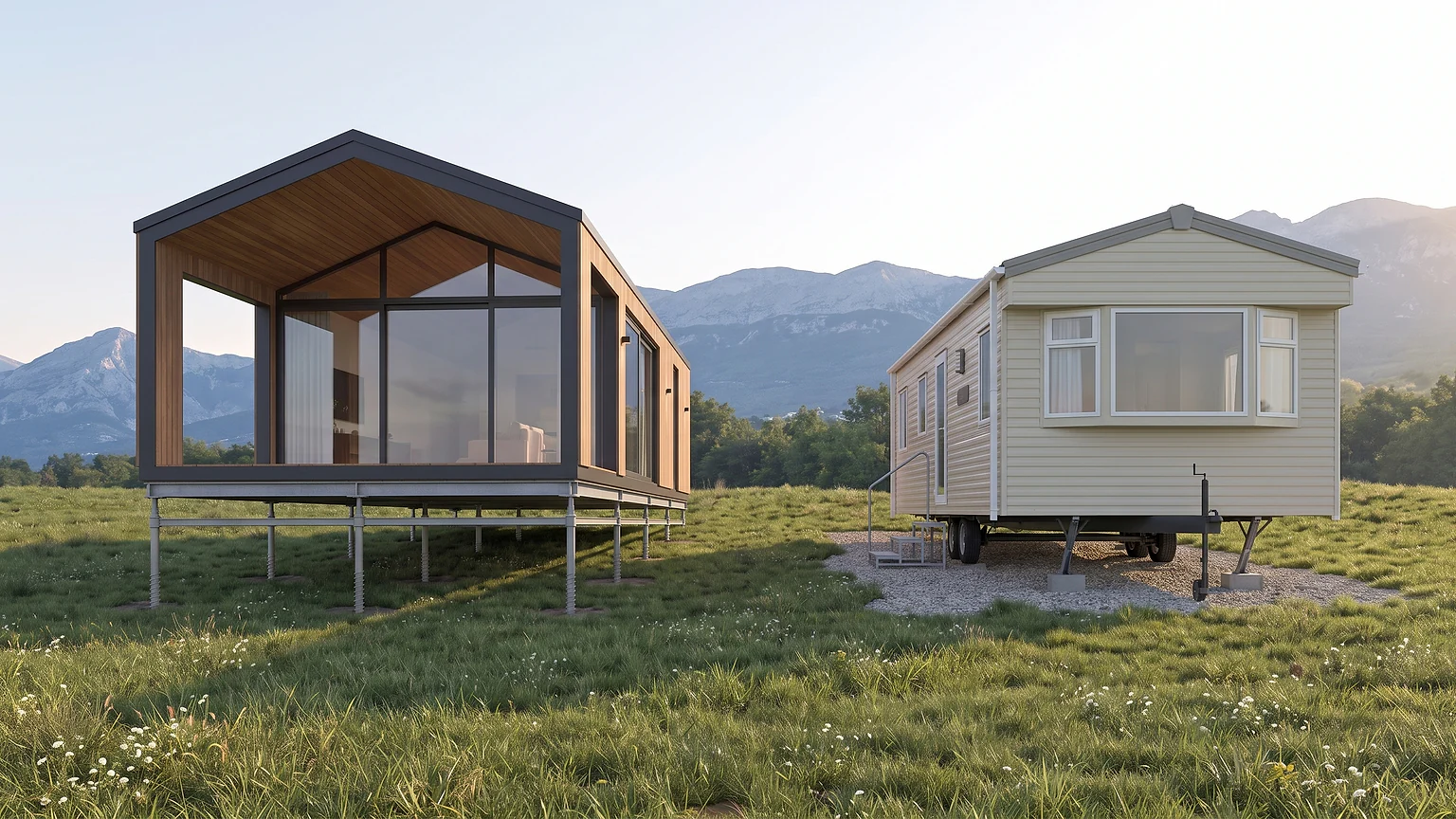
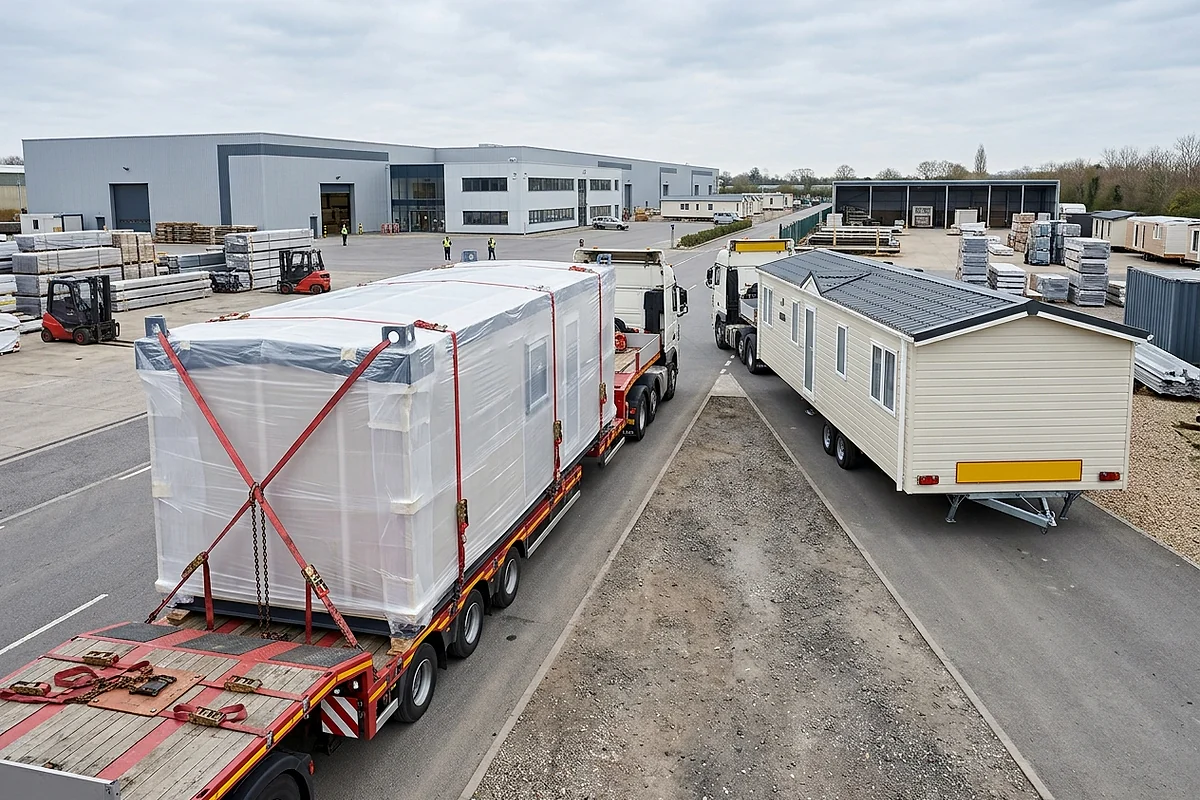
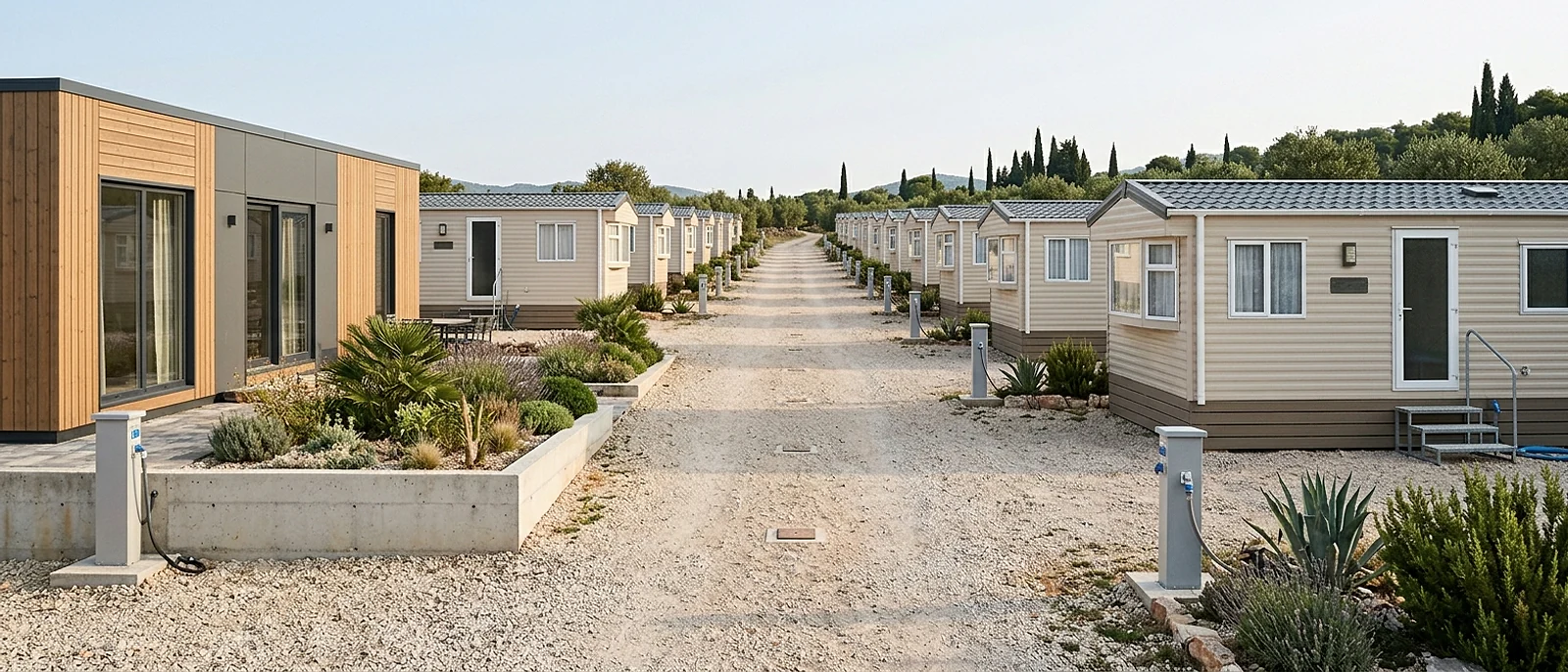
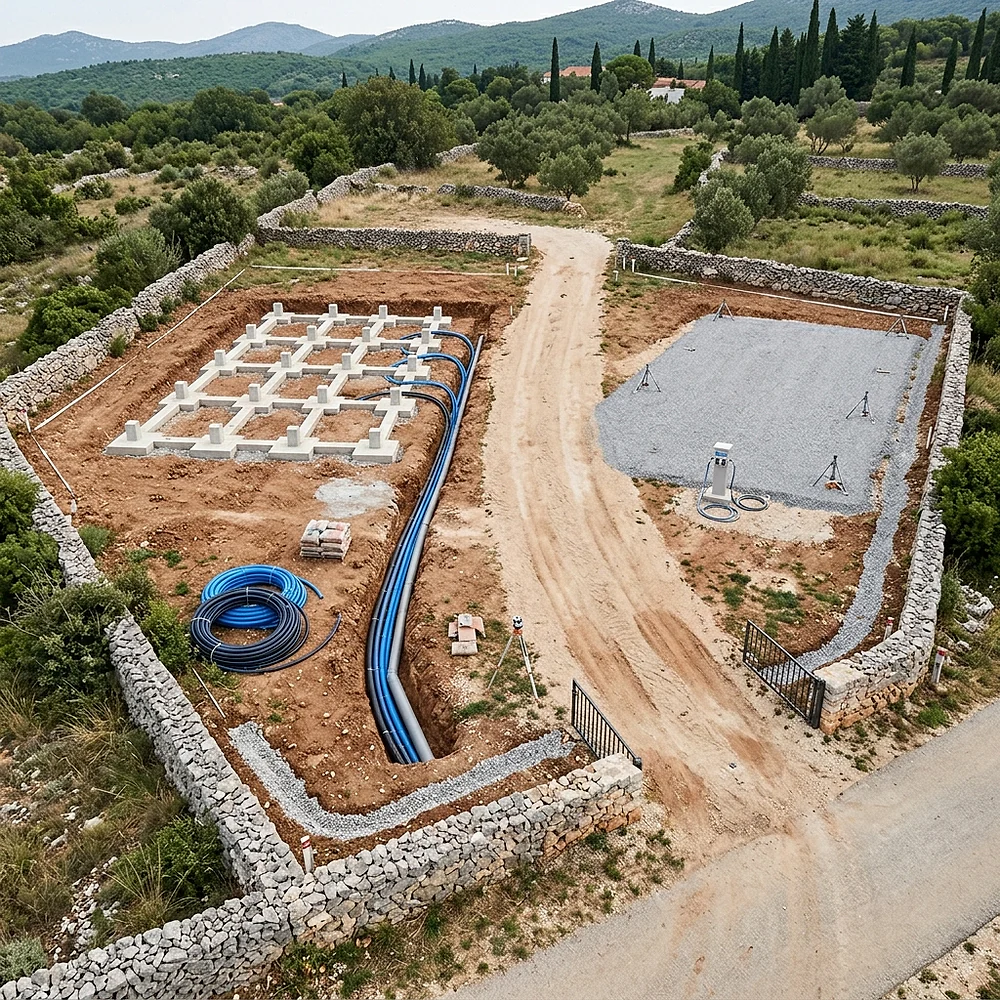
Both can be factory-built and delivered to a plot. The decisive difference is what happens next: a QHOME modular project uses calculated support points—ground screws or reinforced-concrete piles—while a mobile home is designed around a transportable chassis and pitch-based use.
Start with intent
The words describe different project logic
Modular home
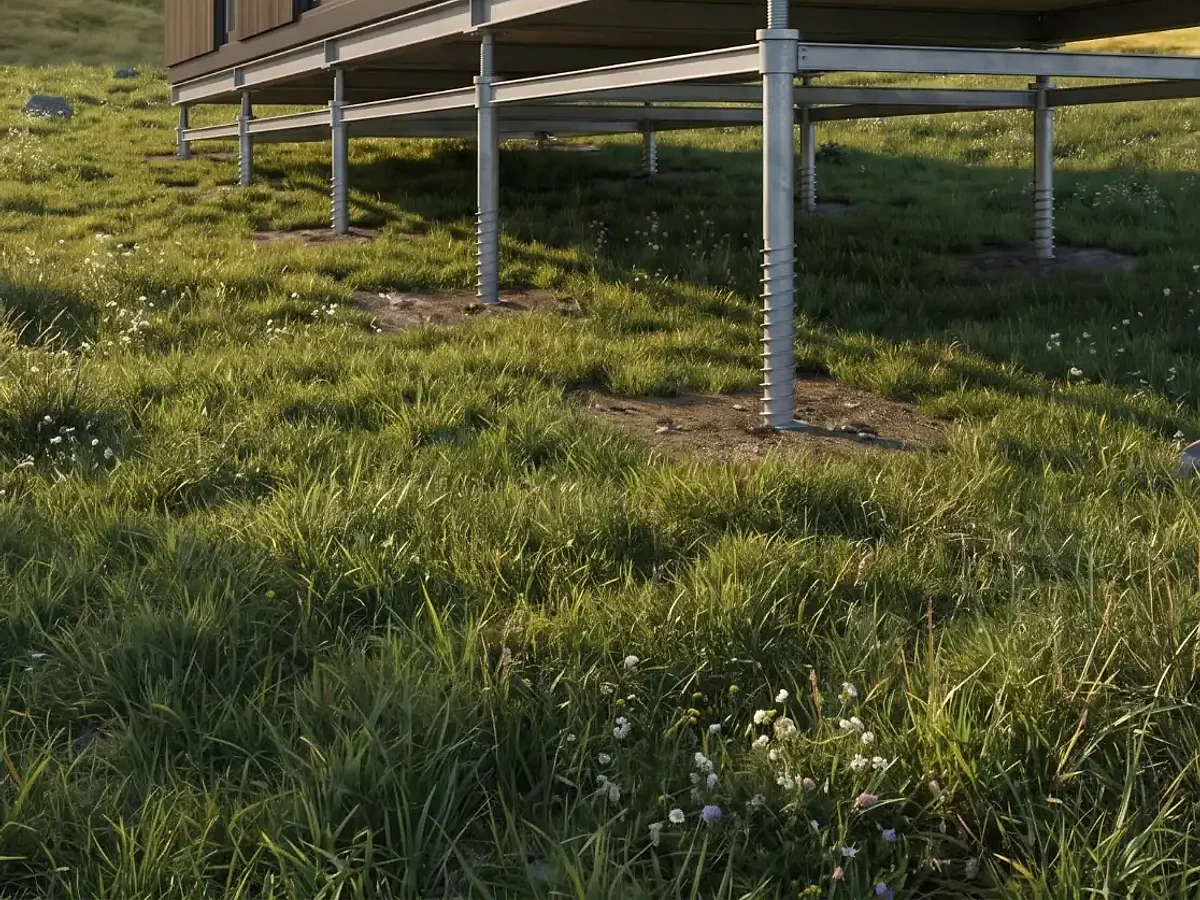
Room-sized modules are manufactured off site, transported and set on calculated support points. QHOME uses engineered ground screws or reinforced-concrete piles, with utilities and long-term use designed for the specific plot.
Mobile home
The unit is designed around transportability, commonly with a chassis, and is often placed on a park or campsite pitch. It can still need licensed land, approved residential or holiday use, safe utility connections and local permission.
Decision matrix
Modular home vs mobile home: side by side
Primary intent
Modular homeA building assembled from factory-made modules
Mobile homeA transportable dwelling for a pitch or park setting
Base and support
Modular homeGround screws or reinforced-concrete piles at calculated support points
Mobile homeChassis, supports, anchors and removable access steps
Movement after installation
Modular homePossible in some designs, but normally a specialist relocation project
Mobile homeDesigned with transportability in mind, although movement still needs logistics and a lawful destination
Rules
Modular homeUsually follows the local building, planning and site-approval path
Mobile homeMay follow caravan, park-home, campsite or other rules; site use can still require permission
Utilities
Modular homeTypically planned as permanent building services
Mobile homeOften pitch connections or park-managed services
Comfort brief
Modular homeCan be specified for year-round residential performance
Mobile homeRanges from seasonal accommodation to residential park homes; verify the exact specification
Best fit
Modular homePermanent homes, guest houses and long-life hospitality buildings
Mobile homeLicensed parks, seasonal accommodation and projects where pitch-based mobility matters
The expensive misunderstanding
Wheels do not automatically remove planning rules
A transportable structure can still be restricted by land use, length of stay, utility connections, dimensions, access, fire safety, site licensing and whether it functions as a permanent dwelling. The United Kingdom’s official park-home guidance, for example, ties residential use to planning permission and site licensing. Other countries use different categories and tests.
For a modular project, factory production does not replace the local building path either. The European construction-products framework creates a common language for product performance, while national and local authorities still set requirements for the building and site.
Before paying a deposit, obtain a written classification for the exact unit, plot and intended use from the competent local authority or a qualified local professional.
Look behind the finish
Comfort depends on the specification, not the category name
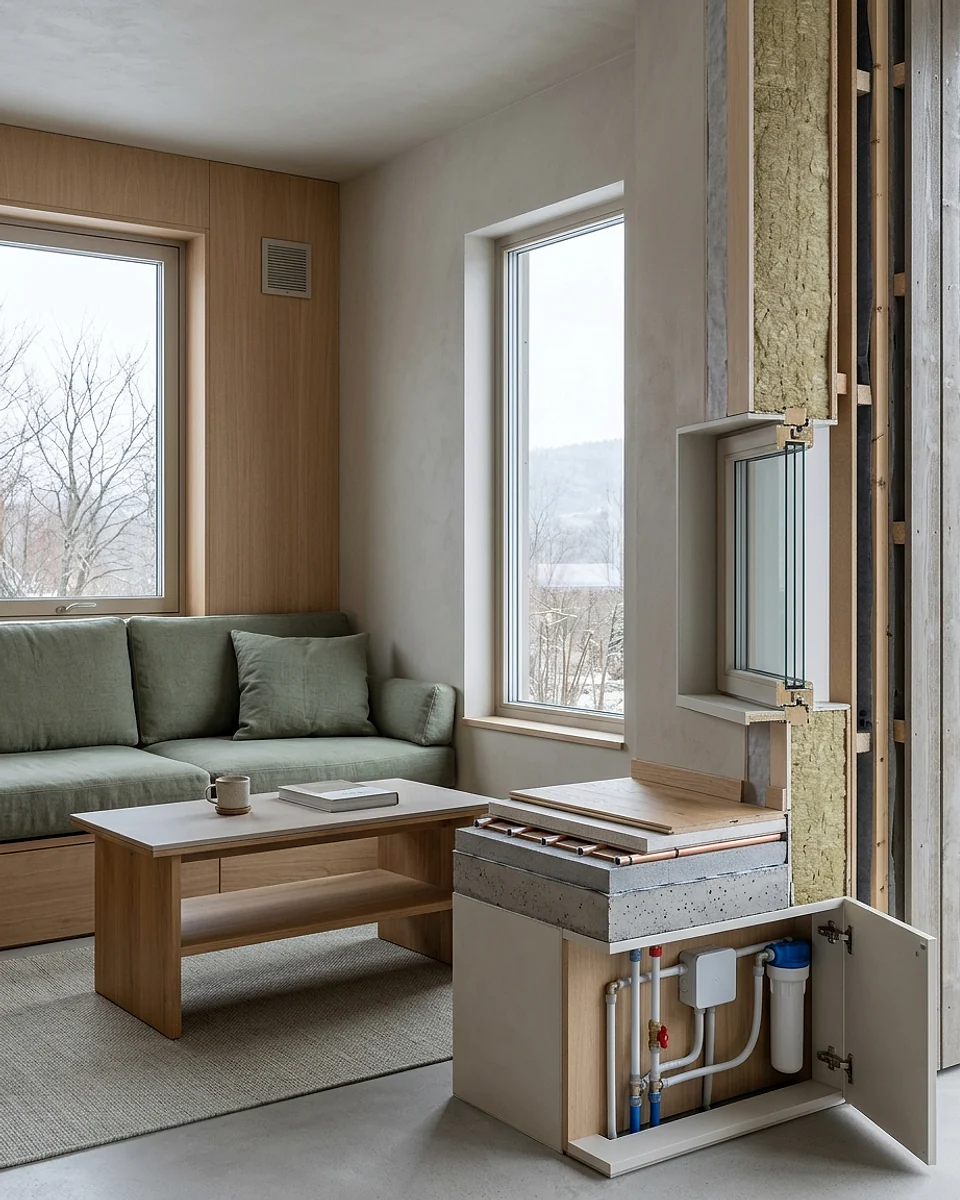
Neither label guarantees thermal performance, air quality, moisture control or acoustic privacy. Ask for wall, roof and floor build-ups; declared product performance; window specification; heating and cooling design; ventilation strategy; condensation details; service access; and the conditions under which the unit may be occupied.
- Year-round envelope: verify climate-specific insulation, airtightness strategy and thermal bridges.
- Moisture: check ventilation, wet-room detailing, drainage and accessible maintenance points.
- Sound: inspect external-envelope and internal-partition performance for permanent or hospitality use.
- Service life: ask how the chassis, frame, pile interface, facade and roof are inspected and repaired.
Compare complete projects
The cheaper unit can become the more expensive site
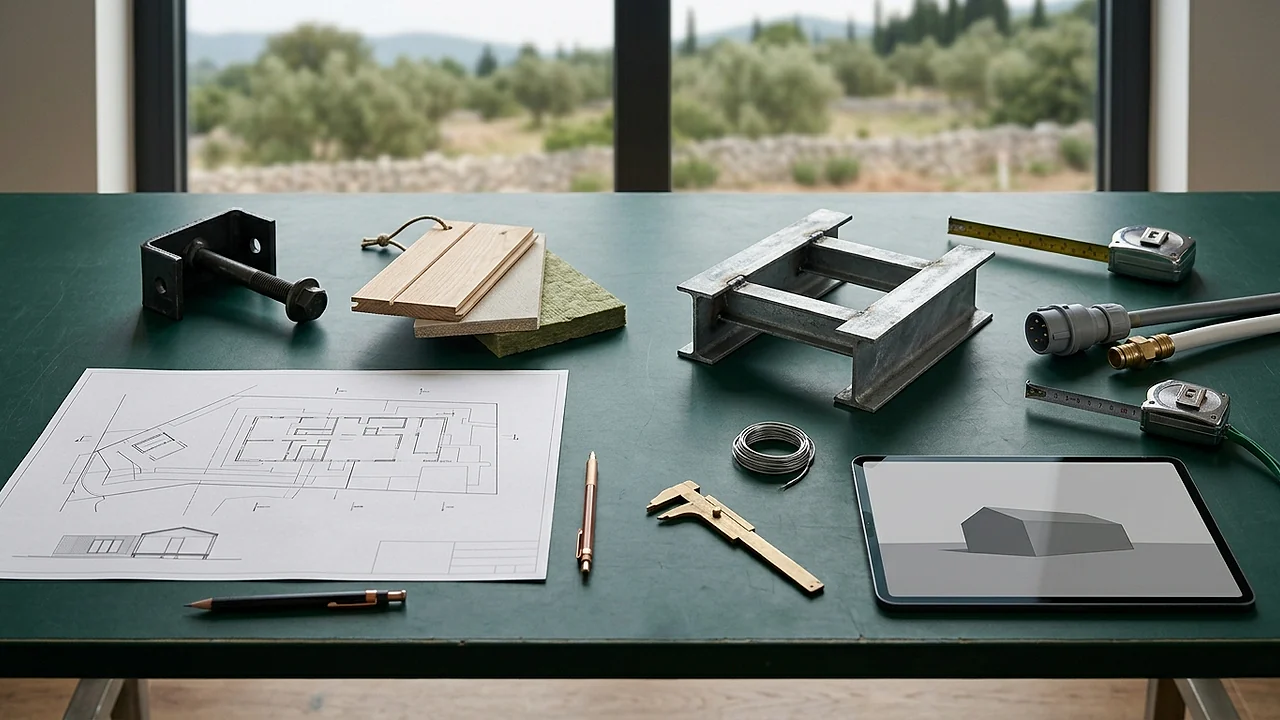
Do not compare a mobile-home unit price with a modular-home project price. Put both options into the same cost sheet: unit and options, taxes, transport, route survey, unloading or crane, engineered piles or pitch, anchoring, utilities, approvals, design work, insurance, site fees, maintenance and eventual removal or resale.
QHOME public prices use the shared published pricing data. They are warehouse Rijeka prices, include VAT and import duties, and exclude delivery and installation. The final specification, schedule and price require confirmation and are not a public offer.
Choose by use case
Which one fits your project?
Choose a modular home when…
- the project is a permanent or long-life building;
- year-round comfort and building-grade services are central;
- the design must respond to a specific plot and local building path;
- the asset is expected to stay in one location.
Choose a mobile home when…
- the project sits within a lawful pitch-based park or campsite;
- seasonal or park-managed operation is the real use case;
- future relocation is a genuine operational requirement;
- the exact unit and site rules permit the intended occupancy.
Quick answers
FAQ
What is the main difference between a modular home and a mobile home?
A modular home is normally designed as a building assembled on a prepared site, while a mobile home is designed around transportability and pitch-based use. The legal classification still depends on the country, site and exact product.
Does a mobile home need planning permission?
Sometimes. Mobility alone does not make residential or holiday use automatically lawful. Land use, duration, connections, siting and local rules all matter.
Can a modular home be moved later?
It may be technically possible, but relocation requires engineering, disconnection, lifting, transport, a lawful new site and fresh installation planning.
Which is better for permanent living?
A building-grade modular home is usually the clearer starting point because it can be specified around local building requirements, long-term comfort and permanent services.
Which is better for a campsite or holiday park?
A mobile or park home can fit a licensed pitch-based operation. A modular unit can fit better when the operator wants permanent infrastructure and building-grade guest accommodation.