
Start with your project
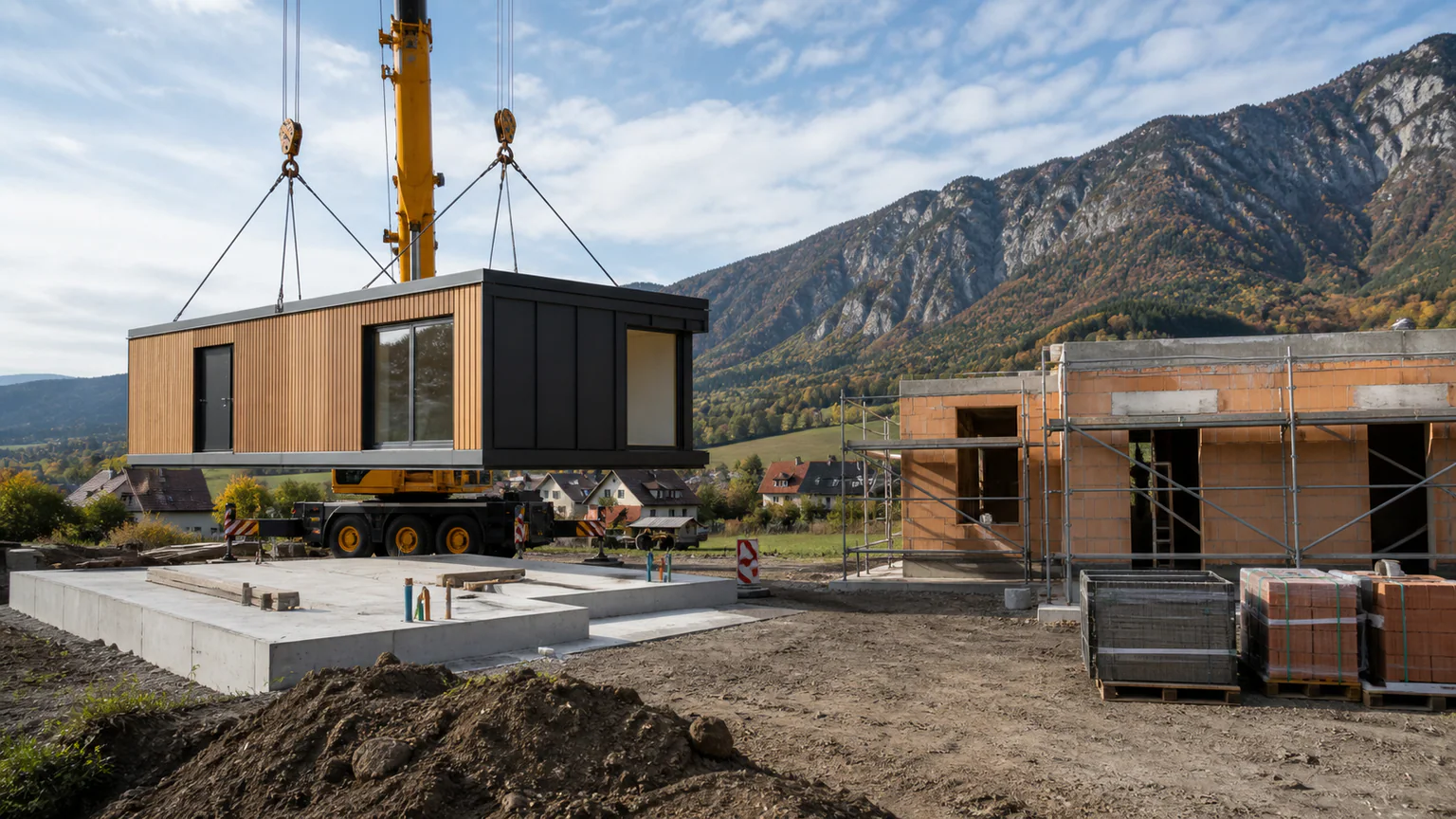
The right answer for modular home vs traditional construction depends on the job the house must do. A permanent residence needs quiet zoning, storage, year-round comfort and service access. A rental unit needs fast cleaning, durable finishes, simple guest instructions and a photogenic first impression. A glamping project needs repeatable rooms and clear operating flow. That is why Magnum, Element and Mantra are not substitutes for each other; they solve different project risks.
What to define first
Before comparing prices, write a one-page brief: number of users, season, utilities, site access, legal path, desired opening date and whether the home must earn income. This brief prevents overbuying area or underbuying comfort.
How to compare QHOME models
Compare QHOME models by scenario, not only by square metres. Magnum may be strongest where family comfort or premium positioning is required, while Element and Mantra may create faster return in guest accommodation. Alpina or Sofia can add an outdoor service layer when food, terrace or pool activity matters.
What the catalog comparison should include
Area, Calculator quote, category, equipment and installation logic should sit beside operating questions: how will people arrive, sleep, cook, shower, heat, cool and leave the unit after a stay?
Practical scenario
Imagine a coastal owner who wants one private family house and two rental units. A large model such as Magnum can become the main residence, while compact units such as Element or Mantra create revenue without turning the entire plot into a hotel. If guests need a memorable outdoor point, Sofia can become a shared kitchen or private terrace upgrade.
From brief to delivery
Turn the buyer decision into a sequence. First, define whether the project is private living, guest accommodation or revenue. Second, confirm the plot: road, crane, foundation, utilities, views, drainage and legal path. Third, shortlist models such as Magnum, Element and Mantra. Fourth, compare base package, premium options, smart systems and outdoor additions. Fifth, decide how the home will be maintained after installation.
This sequence protects the buyer from the classic trap of choosing a model too early and then discovering that the site, utility budget or business model points in another direction. For modular home vs traditional construction, the workflow is more important than a single render because it makes the buying conversation measurable.
Comparison table
Use this checklist as a first filter before requesting a final configuration.
- define private, guest or revenue use before choosing area
- confirm access road and crane zone before production
- separate the calculator house quote from foundation, delivery and utilities
- check heating, ventilation and service access for the season
- choose the smallest model that still supports the daily scenario
What to avoid
The most common mistake is comparing only The quotation and image. A buyer may see Magnum or Element as a finished object, but the real project also includes access, foundation, crane, utility points, climate strategy and future maintenance. Compare the operating scenario, not only the render.
QHOME guidance
For this topic, QHOME models should be compared by scenario rather than by size alone. The right unit is the one that reduces project risk and matches daily use.
- Magnum — 52.52 m²; price and packages on the product page; best fit: revenue-ready modular home with panoramic end glazing and autonomous systems.
- Element — 72.6 m²; price and packages on the product page; best fit: minimalist modular home with clean proportions, contrasting facade and generous glazing.
- Mantra — 104.9 m²; price and packages on the product page; best fit: premium single-storey family home with covered terrace and integrated one-car carport.
- Alpina — 44.76 m²; price and packages on the product page; best fit: turnkey micro-chalet for glamping and hotel-room use with panoramic lounge and GearBox.
- Sofia — 77.86 m²; price and packages on the product page; best fit: single-storey home organized around a large terrace with two bedrooms and open social zone.
Your decision checklist
- define private, guest or revenue use before choosing area
- confirm access road and crane zone before production
- separate the calculator house quote from foundation, delivery and utilities
- check heating, ventilation and service access for the season
- choose the smallest model that still supports the daily scenario
Questions before you request a quote
- Which QHOME models should be compared for modular home vs traditional construction, and why?
- What is included in The quotation, and what is project-specific?
- What site information is required before a reliable offer?
- Which utilities, smart systems and outdoor additions should be planned now?
- What assumptions could change delivery, installation or operating cost?
Sources and further reading
- QHOME catalog — Current models, planning information and product links.
- Mordor Intelligence — Europe Prefabricated Housing Market — European prefab housing market sizing and growth context.
FAQ
What is the first step for modular home vs traditional construction?
Define the use case, site conditions, budget, utilities and operation model before choosing the module.
Which QHOME models should I compare?
Start with Magnum, Element and Mantra, then compare area, calculator quote, installation path and operating scenario.
Can one modular home work for both private and business use?
Yes, but the specification should include both daily comfort and guest-operation details such as access, cleaning, durability and climate control.
What should I verify before ordering?
Verify land use, access, foundation, utilities, delivery route, crane, permits and maintenance responsibilities.
Why use QHOME for this project?
QHOME gives a catalog of ready models that can be compared by area, budget, material, package and project scenario.