
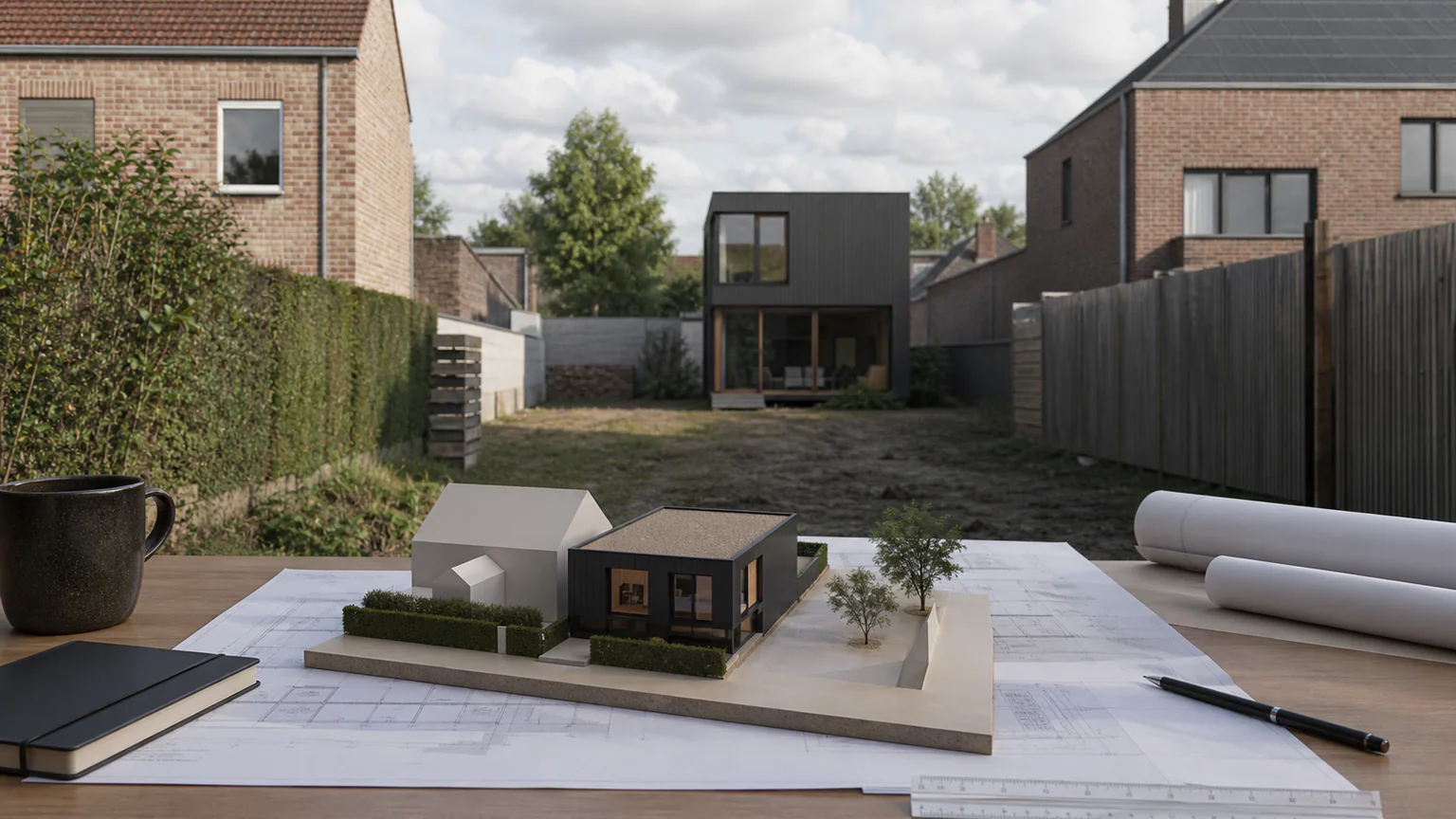
Local permit logic
For modular home in Belgium, the first conversation should be with the municipality or a local licensed consultant. The critical question is not whether the home is modular; it is how the authority classifies the unit on that land. In Belgium, typical review themes include regional differences between Flanders, Wallonia and Brussels.
Private use versus tourism use
A private guest house, a permanent residence and a tourism rental can follow different approval paths even when the physical module looks similar.
Land, utilities and use case
Swift, Atak and GEO can be considered only after the plot is understood. Check zoning, access, fire routes, water, wastewater, grid connection, environmental constraints and whether the house will be connected permanently. Do the same for QBBQ if it becomes a commercial cooking or service point.
Documents to collect
Collect cadastral information, land-use status, utility availability, access plan, preliminary site layout, intended use and written advice from local professionals.
Practical country scenario
A buyer in Belgium might start with a compact rental concept using Swift or Atak. Before ordering, the buyer should confirm whether the plot allows tourist accommodation, how wastewater will be handled and whether a modular unit is treated as a building, temporary structure or accommodation asset.
Documents and local verification workflow
The local verification workflow should be documented. Prepare a simple site plan, intended use, selected QHOME candidates, dimensions, utility concept, access route and installation method. Then ask the municipality or licensed consultant which classification applies in Belgium. The same unit can be read differently depending on permanence, connections, land category and whether guests pay to stay.
Keep written notes from each consultation. If the project changes from private use to tourism use, repeat the check before ordering. A compact Swift may have an easier first discussion than a large family model, but no model should be assumed automatically permitted.
Permit checklist
The table below gives a practical comparison lens for this topic. It is not a substitute for a site-specific quote, but it helps frame the first conversation.
| QHOME model | Use scenario | Local check | Transport / footprint |
|---|---|---|---|
| Swift | private plot | planning status | S/M/L: 25.26–48 m² |
| Atak | tourism rental | tourism classification | S/M: 20–35 m² |
| GEO | campsite/glamping | utility availability | 8.78 × 3.98 m + mezzanine |
| Siena | service terrace | food/fire/service rules | 8.78 × 3.98 m + mezzanine |
What to avoid
The common mistake in Belgium is assuming that a factory-built unit is automatically exempt from local planning rules. A modular home can still be treated as a building, accommodation unit or tourism asset depending on land status, connections, permanence, size and use. Check classification before choosing Swift or any other model.
QHOME guidance
For Belgium, start with a two-track approach: a local permission check and a QHOME model selection. Keep the module specification open until the municipality or consultant confirms use, utilities and installation path.
- Swift — 25.26–48 m²; price and packages on the product page; best fit: flexible line for camping or private living near the city with light architecture and simple ergonomics.
- Atak — 20–35 m²; price and packages on the product page; best fit: compact minimalist home for two people with functional layout and landscape integration.
- GEO — 48.22 m²; price and packages on the product page; best fit: ergonomic modular home for family or commercial stay with separate bedroom and upper level.
- Siena — 48.22 m²; price and packages on the product page; best fit: model for permanent living or glamping parks with bathroom, kitchen, dining zone and mezzanine sleeping level.
- QBBQ — 7.2 m²; price and packages on the product page; best fit: premium outdoor kitchen for terraces, villas, restaurants, campsites and hospitality projects.
Your decision checklist
- ask the local authority how a modular home is classified in Belgium
- confirm land zoning and permitted use before paying for production
- check whether tourism use needs a separate operating permission
- verify road access, fire access, water and wastewater rules
- keep written decisions from the municipality or licensed consultant
Questions before you request a quote
- How is a modular home classified on this land in Belgium?
- Is the intended use private, rental, campsite, hotel or mixed?
- Which documents must be prepared before production starts?
- Are there utility, fire-access, environmental or tourism constraints?
- Who is responsible for local design sign-off and permit communication?
Sources and further reading
- QHOME catalog — Current models, planning information and product links.
- European Commission — Energy Performance of Buildings Directive — EU building energy performance context.
FAQ
Do I need permission for modular home in Belgium?
Usually this must be checked locally. In Belgium, the answer depends on land classification, permanence, utilities, footprint, private or tourism use and municipal interpretation.
Can a QHOME modular home be used for tourism in Belgium?
It may be possible, but tourism use can trigger separate registration, classification, fire access, parking, wastewater and operating rules. Confirm this before ordering a unit such as Swift or Atak.
Which QHOME models are safer for an early legal review?
Compact models such as Swift, Atak or GEO are often easier to discuss because footprint and transport are clearer, while larger models need deeper review of planning, access and utilities.
Should I buy land before choosing the module?
Land should be checked before final model selection. The plot determines access, permitted use, foundation, utilities, fire access, views and the practical business model.
Who should confirm the legal path?
A local architect, planner, municipal authority or licensed consultant should confirm classification and required documents. This article is a checklist, not legal advice.