Connecting your modular home: electricity, water and sewage
A QHOME house arrives with its internal systems complete and tested at the factory. On site it only needs to be connected to your utilities. This guide shows what is done at the factory, what you prepare on the plot, and what a local contractor connects on delivery day.
Ships from Rijeka, Croatia
2 weeks production
~1 week delivery
Up to 50 units / month
The principle: factory inside, site outside
Inside the module
Wiring, plumbing, heating and cooling equipment, ventilation — installed and tested at the factory.
On your plot
Supply lines brought to the module's connection points before delivery.
At handover
A local licensed contractor makes the physical connections and commissions the systems.
Electricity
The house connects to your site supply at a defined entry point on the module.
Required capacity depends on the model and configuration — heating type matters most.
Prepare on site: a supply cable to the entry point, protection per local code, and a meter arrangement with your utility.
The connection itself is a job for a licensed local electrician.
Water
A single cold-water inlet at a defined point; hot water is produced inside the house.
Prepare on site: a frost-protected supply line with a shutoff and, where required, a pressure reducer.
No mains water? Well or cistern systems can feed the same inlet — sized locally.
Sewage and septic
A single waste outlet at a defined point on the module.
Options: municipal sewer connection, septic tank, or a certified small treatment unit — driven by local rules.
Prepare on site: the receiving line or tank with correct fall from the outlet.
Heating, cooling and internet
Heating and cooling equipment is installed at the factory according to the chosen configuration.
Site side: usually only power, and for some setups condensate drainage.
Internet: entry provisions are in place; the connection is by your local provider — fixed line or mobile, the house does not constrain the choice.
Where the connection points are
Each model has defined entry and exit points; their positions and parameters are part of the model's technical documentation. QHOME provides the connection scheme so your contractor can place stubs before delivery — ask for it when requesting a quote.
What to prepare before delivery
Bring supply lines to the connection pointsWith slack for final routing.
Do trenches and conduits earlyWhile heavy machinery access is still easy — before the house arrives.
Arrange meters and permissionsUtility lead times can be weeks — start early.
Book the contractorA local electrician and plumber for connection day.
Frequently asked questions
Does QHOME connect the utilities?
The physical connection is done by a local licensed contractor. QHOME provides the schemes and parameters; in some regions we can recommend partners.
Can the house run off-grid?
Configurations for autonomous use are possible — tell us the site conditions and we will review the options.
What power supply do I need?
It depends on the model and configuration; the model page and connection scheme state the required capacity.
Can I prepare the stubs before ordering?
Better after ordering: stub positions follow the specific model's connection scheme.
What if utilities are far from the house position?
That is a site-works question for your local contractor; the house itself only needs the lines at its entry points.
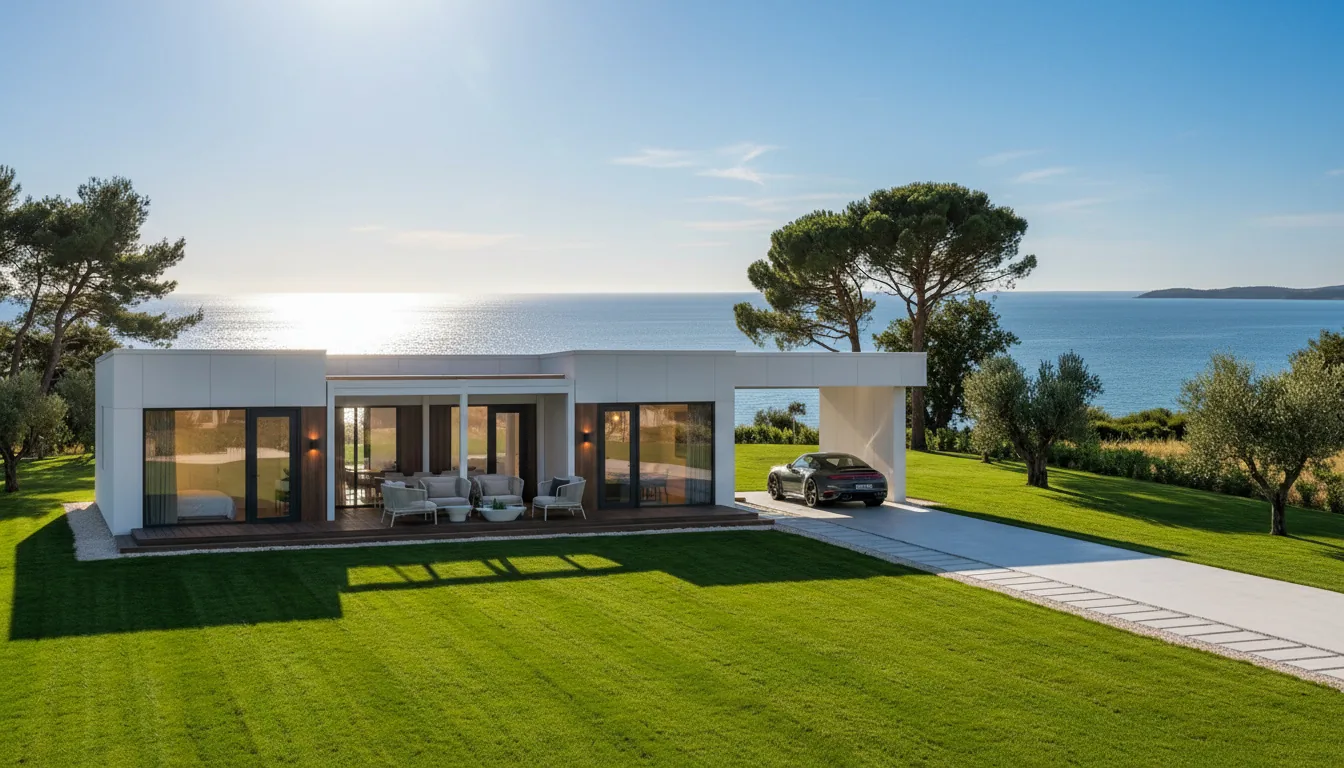
MANTRA is a premium 104 m² single-storey family home for 4-6 people, with a spacious covered terrace, a clear split between private and shared zones, and an integrated one-car carport.
Area incl. walls
104.9 m²
Number of separate bedrooms.
Number of separate bedrooms.
2
Number of bathrooms.
2
Site footprint with terraceCalculated rectangle enclosing the home and terrace: length × width. For irregular plans it includes the space within those overall dimensions. 10 × 14 = 140 m²
Site footprint with terrace
140 m²
Internal areaInterior floor area from the published pricing data; excludes walls and terrace.
Internal area
87.26 m²
DimensionsExternal length × width. 10 × 14 m
Dimensions
10 × 14 m
master bedroom
2 additional rooms
kitchen-dining-living space
bathroom
See the model
Alpina
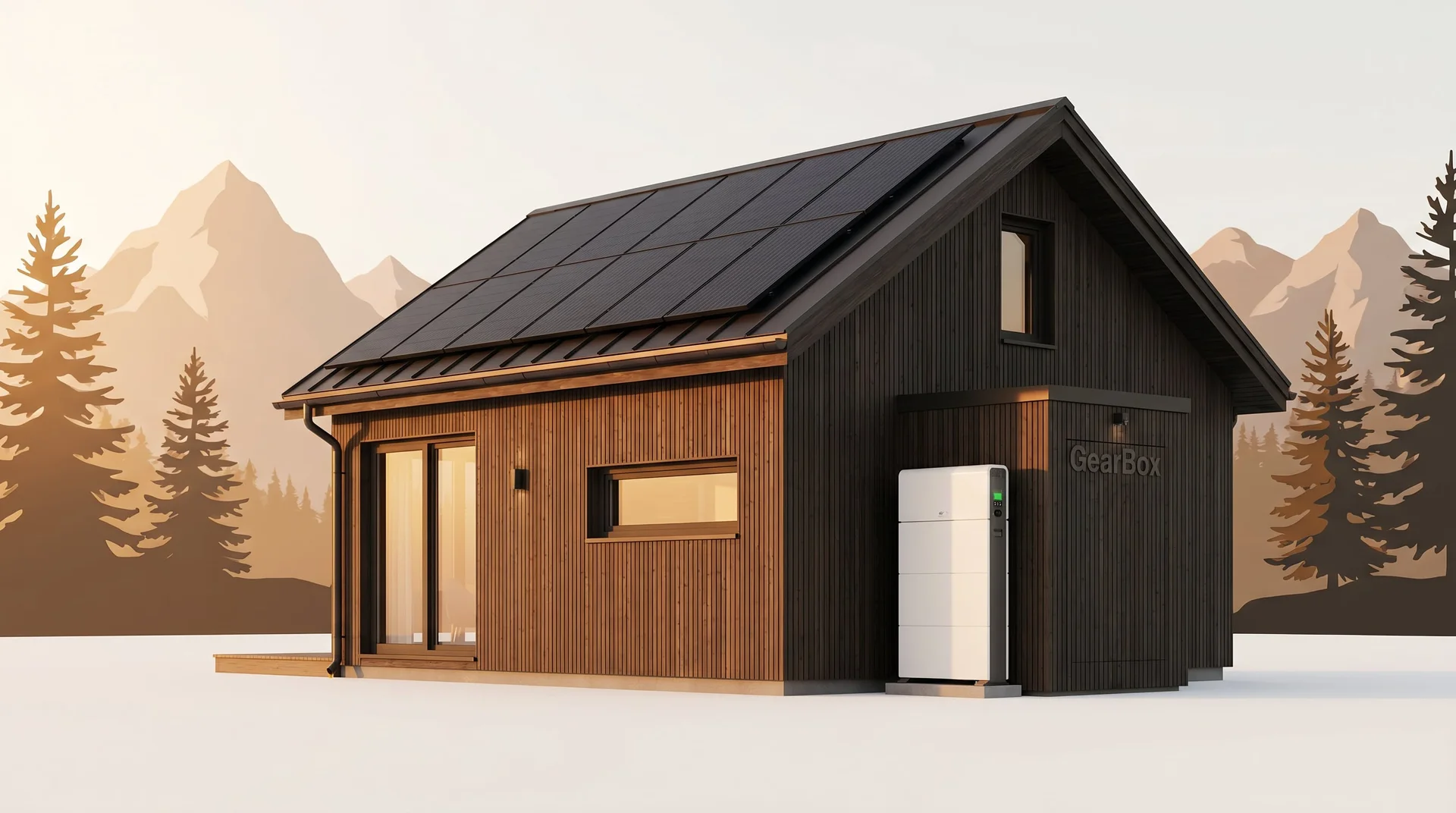
ALPINA is a factory-built micro-chalet for four people: a compact 29.11 m² home with a functional hallway, bright lounge, kitchen, bathroom, full sleeping zone and GearBox for off-grid equipment and seasonal gear.
Area incl. walls
44.76 m²
Number of separate bedrooms.
Number of separate bedrooms.
1
Number of bathrooms.
1
Site footprint with terraceCalculated rectangle enclosing the home and terrace: length × width. For irregular plans it includes the space within those overall dimensions. 12 × 3.45 = 41.4 m²
Site footprint with terrace
41.4 m²
MezzanineMezzanine floor area; it does not increase the site footprint.
Mezzanine
3.36 m²
Internal areaInterior floor area from the published pricing data; excludes walls and terrace.
Internal area
31.55 m²
DimensionsExternal length × width. 12 × 3.45 m
Dimensions
12 × 3.45 m
hallway storage
panoramic lounge
fold-out sofa
compact kitchen
See the model
Lumen
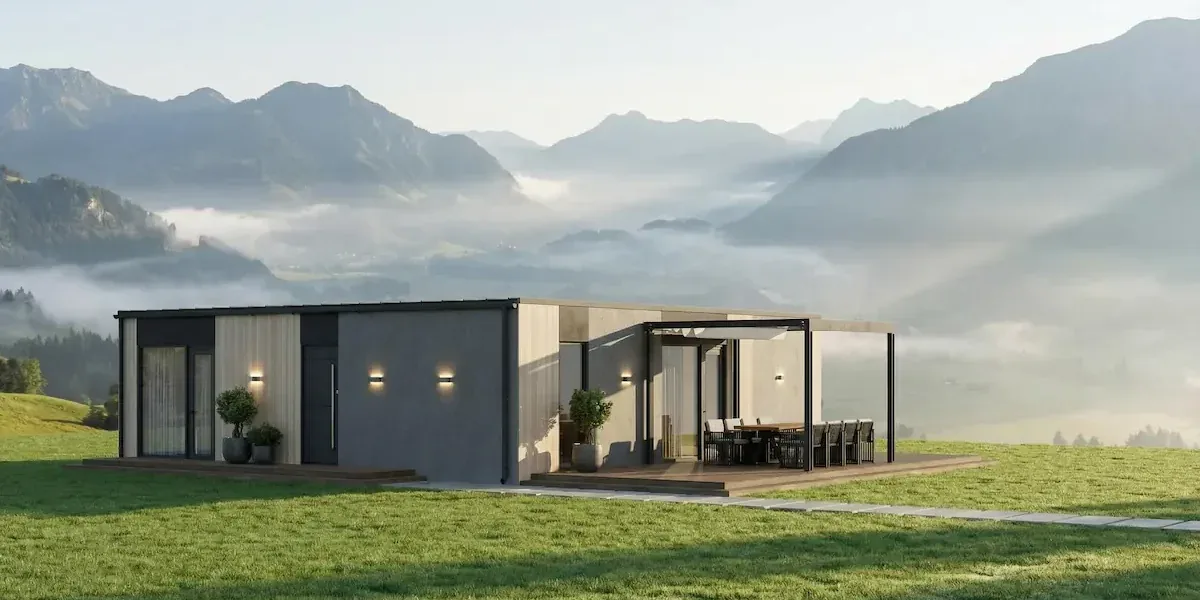
Restrained modular solution with vertical timber slats, fiber-cement panels and an efficient layout for permanent living.
Area incl. walls
90.19 m²
Number of separate bedrooms.
Number of separate bedrooms.
3
Number of bathrooms.
1
Internal areaInterior floor area from the published pricing data; excludes walls and terrace.
Internal area
77.92 m²
Site footprint with terraceCalculated rectangle enclosing the home and terrace: length × width. For irregular plans it includes the space within those overall dimensions. 10.75 × 10.6 = 113.95 m²
Site footprint with terrace
113.95 m²
DimensionsExternal length × width. 10.75 × 10.6 m
Dimensions
10.75 × 10.6 m
3 bedrooms
bathroom
wardrobe
terrace
See the model
Ready to plan your project?
Pick a model, compare packages in the calculator and send us your site details — we will check foundation, delivery, utilities and regional fit for you.